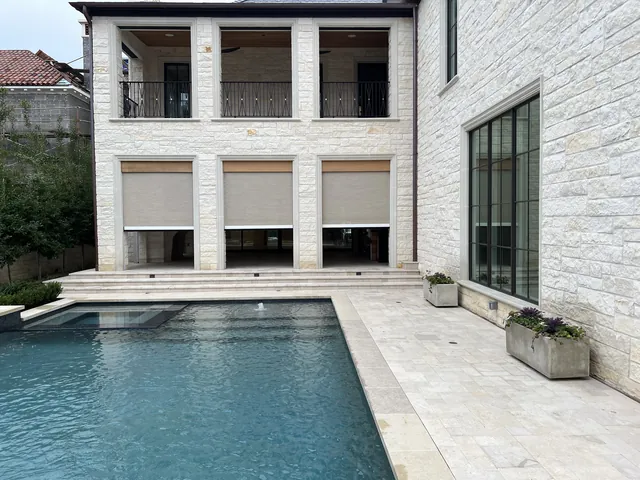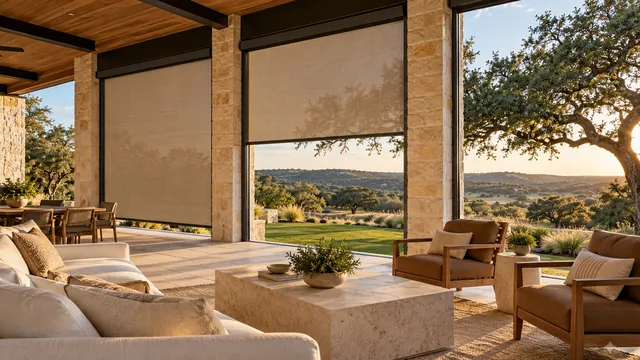
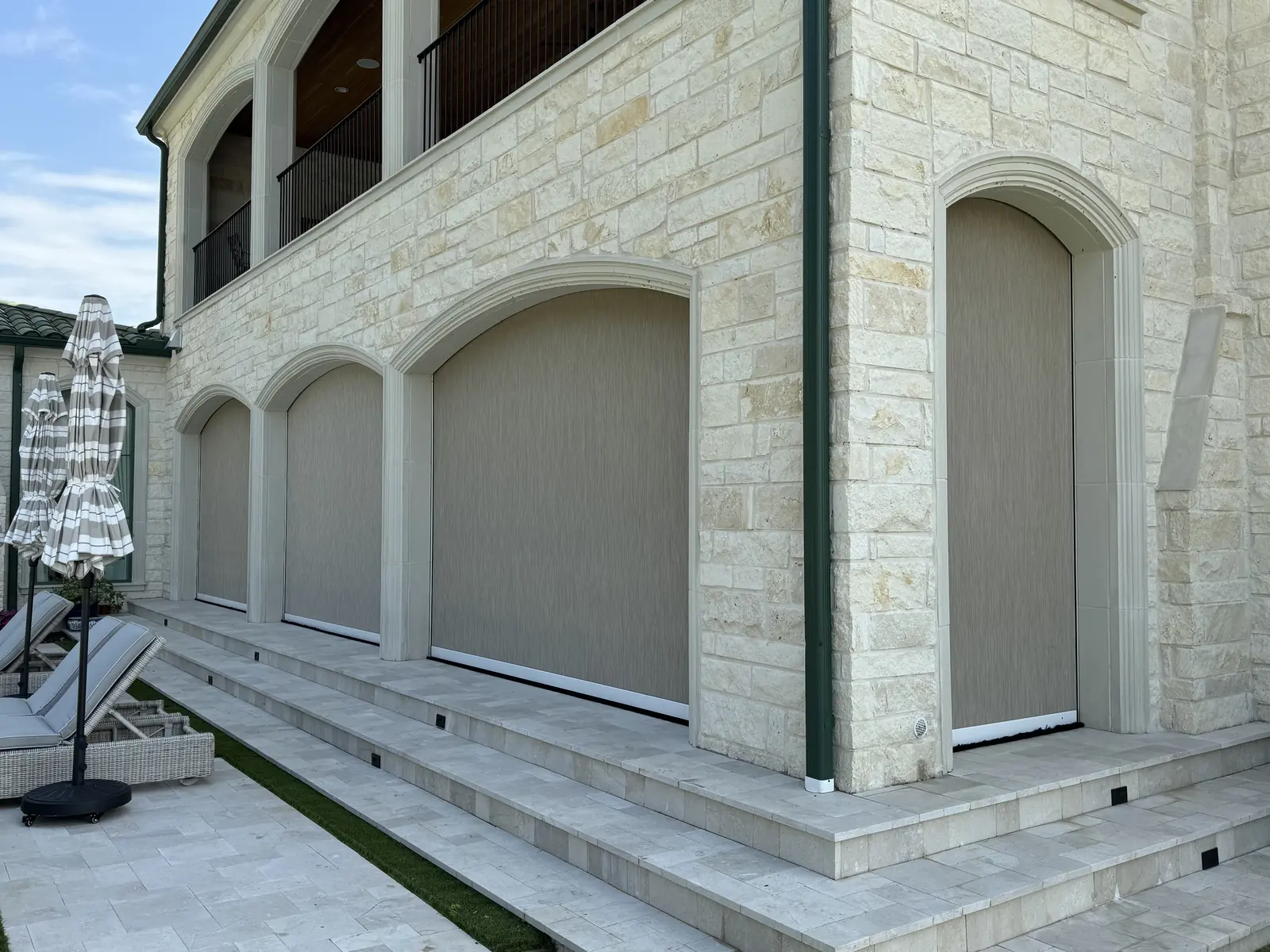
Not every opening on a patio needs to move. The sides, the gap beside a fireplace, the span under a staircase — these stay closed, and a fixed panel is the simpler, sturdier and less expensive way to close them. A fixed panel is just two things: a frame made to the opening, and an infill stretched across it. The frame is powder-coated to match the motorized screens beside it; the infill is where the decision is. Sun fabric, insect mesh, glass, or polycarbonate each do a different job, and the right patio often uses more than one. Here is how we choose.
The PanelA Frame and an Infill
Every fixed panel starts the same way: we measure the opening, build an aluminum frame to it, and powder-coat it in the same finish as the rest of the screening so the patio reads as one piece. What changes from panel to panel is what goes inside the frame. Because there is no motor and nothing to maintain, a fixed panel is the economical choice wherever an opening is going to stay closed anyway — and because the frame is made to the opening, it fits cleanly rather than being trimmed to fit. The infill is chosen per panel, for what that side of the patio actually needs.
SunTexSun and View
Where a panel faces the sun, the infill is Phifer SunTex, the same heavier weave we use for shade. SunTex 80 is the most open, keeping the most view while still stopping about 80 percent of the sun; SunTex 90 closes that down for a side that takes more direct light. A SunTex panel does on a fixed side exactly what a motorized screen does on the opening you use — cuts the heat and glare before they reach the patio — without a motor to buy. On the west and south sides of a patio, this is usually the answer.
Insect ScreenNo-See-Ums
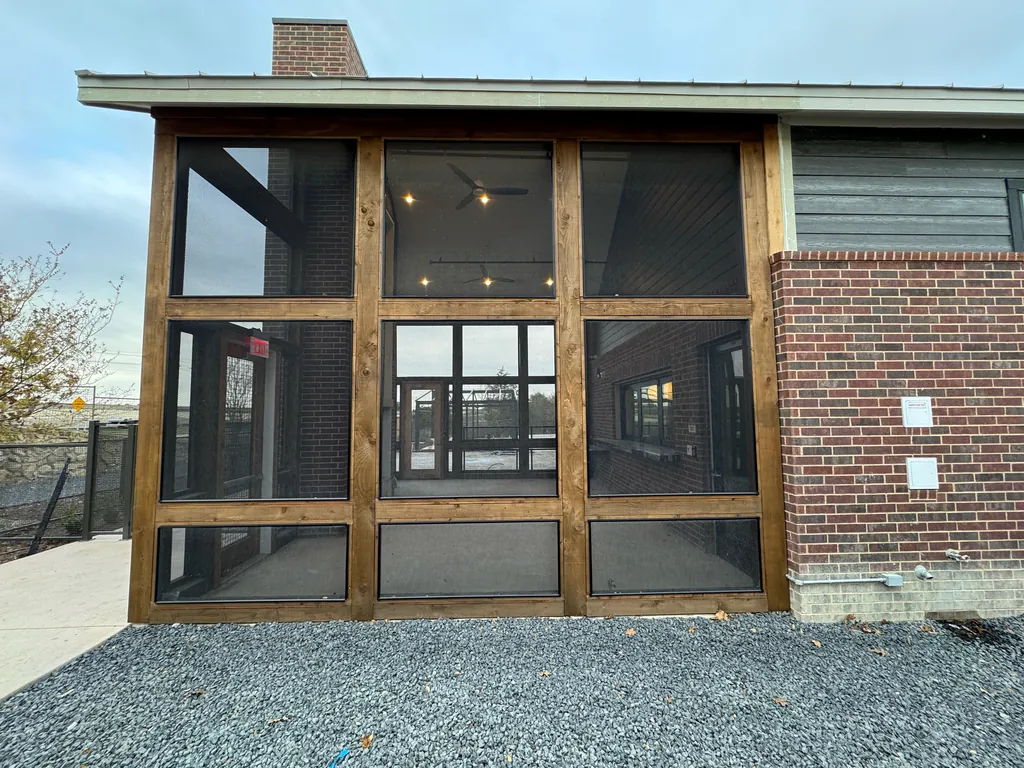
Where a side is about the bugs rather than the sun, we use Phifer No-See-Ums, a tight twenty-by-twenty fiberglass weave that stops gnats, sand flies and the no-see-ums ordinary screen lets straight through, while keeping the breeze and nearly all of the view. The yarn is vinyl-coated glass, so it resists rust and corrosion and will not burn. It is the infill for a shaded side, a porch that catches the evening air, or a pool enclosure — anywhere the point is to let the outside in without the insects. It is also the usual choice for the screen door that matches the panels.
GlassWhen You Want It Sealed
Some openings should be closed for good against weather, not just filtered. There a glass panel turns the patio into a true three-season room: it keeps the wind, rain and cold out while leaving the view completely open, and it cleans like any window. Glass is the choice for the side you want sealed year-round — behind a seating area, against a prevailing wind, or where an open mesh would let too much weather through in winter. It is the most finished-looking infill, and the one that makes a covered patio feel like part of the conditioned house.
PolycarbonateTough and Light
Where glass would be risky or simply too big, polycarbonate does the same job without the weight or the breakage. It is a clear, impact-resistant panel that shrugs off a stray ball, a hailstone or a slammed door, which makes it the sensible choice for a pool enclosure, a play area, or a tall opening where a pane of glass would be a hazard. It gives you the sealed, see-through closure of glass with far more toughness, and it cleans the same way. For families and for large spans, it is often the better of the two clear options.
Mixing ThemOne Patio, Different Sides
A real patio is rarely all one infill. A common build: SunTex panels on the sunny sides, a No-See-Ums door and panel where people come and go, and a glass or polycarbonate panel on the side you want sealed against the weather — all in matching frames and finish so they read as one wall. We walk the patio and choose the infill opening by opening, for which way it faces and how it is used, then tie it together with the motorized screen across the main opening. The result looks designed, because it is.
What Each One NeedsLow Maintenance
None of it asks for much. Mesh panels — SunTex and No-See-Ums — want a wash with mild soap and water once or twice a year, and that is it. Glass and polycarbonate are cleaned exactly like windows, with a soft cloth and a standard cleaner. There are no motors on a fixed panel to service and nothing to lubricate, which is part of why fixed panels are the low-cost, low-worry way to close the sides of a patio. Choose the right infill for each side and the panels simply sit there and do their job for years.
Sources. outdoorshades.com (our own site) — October 2026.