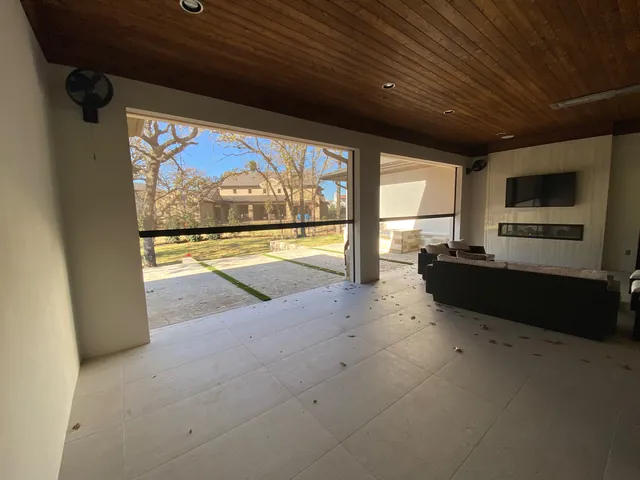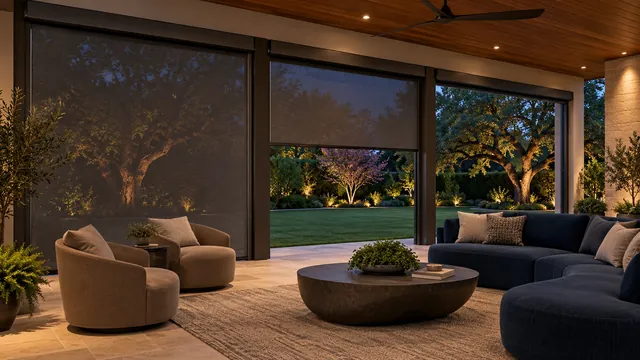
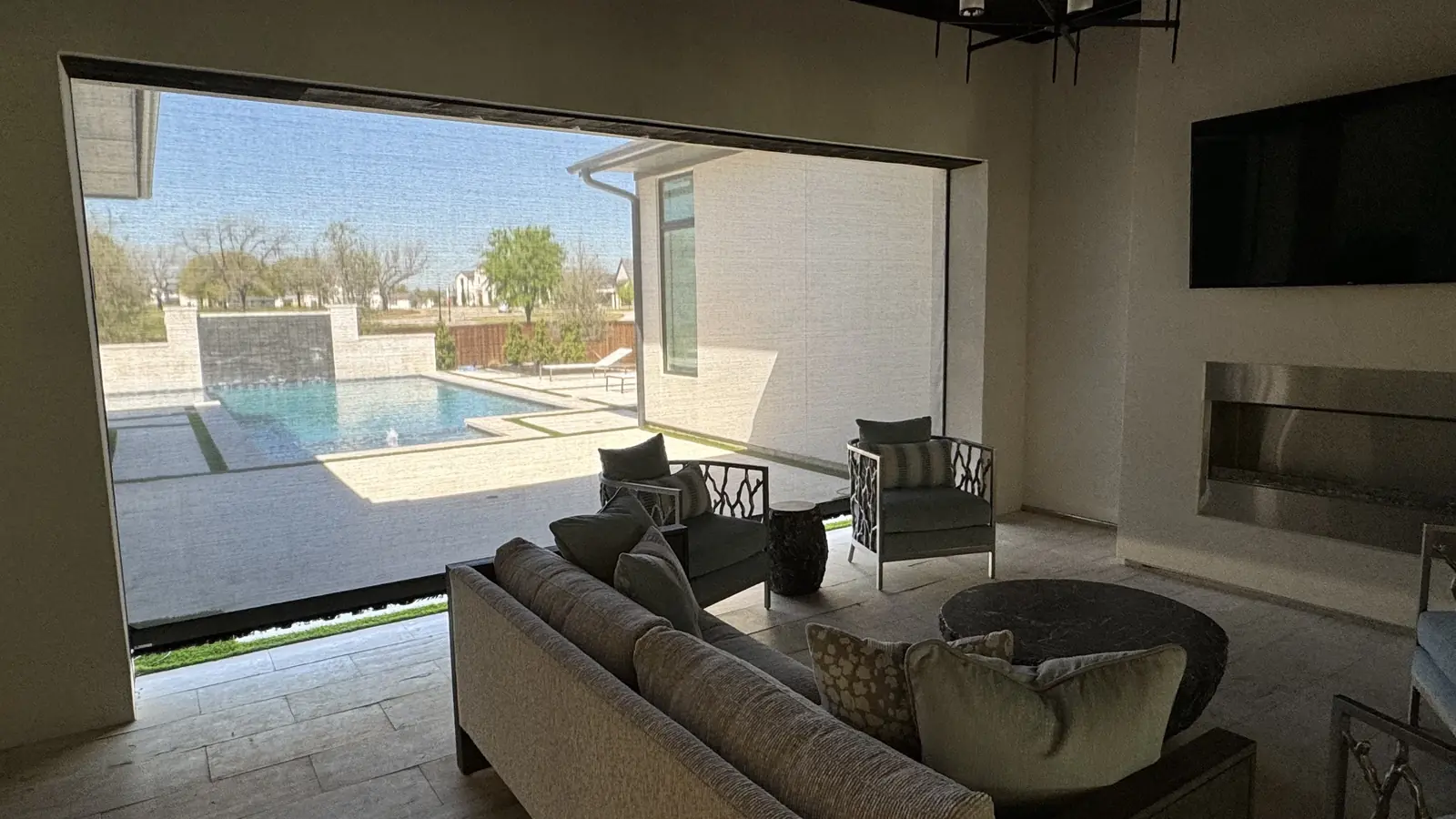
The screen is a frame and a motor, but the fabric is what you look through and what stops the sun, so it is the choice that decides how the patio feels. Phifer makes the weaves we specify most, and they are not interchangeable: a roller screen wants a thin, tight fabric that coils into a housing, a fixed panel can carry a heavier one, a door that faces the grass wants an insect mesh, and a patio used in winter wants no mesh at all. The right answer is usually a different fabric on different openings of the same patio. Here is how we choose.
OpennessThe One Number That Matters
Every sun fabric has an openness factor: the share of the weave that is actually holes. A 3 percent fabric is nearly solid and stops about 97 percent of the sun; a 20 percent fabric is airy and stops about 80. Lower openness means more shade, more glare control and more daytime privacy, at the cost of a little view; higher openness keeps more of the yard and the breeze. There is no best number, only the right one for which way an opening faces and what it is fighting — which is why we choose it per opening, not once for the whole patio.
Motorized ScreensSunTex 95 and 97
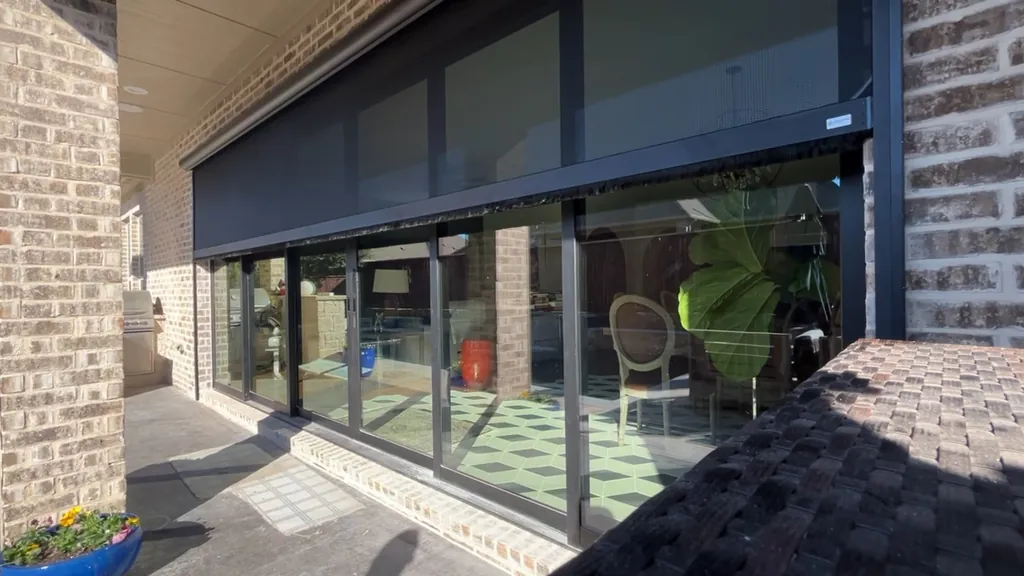
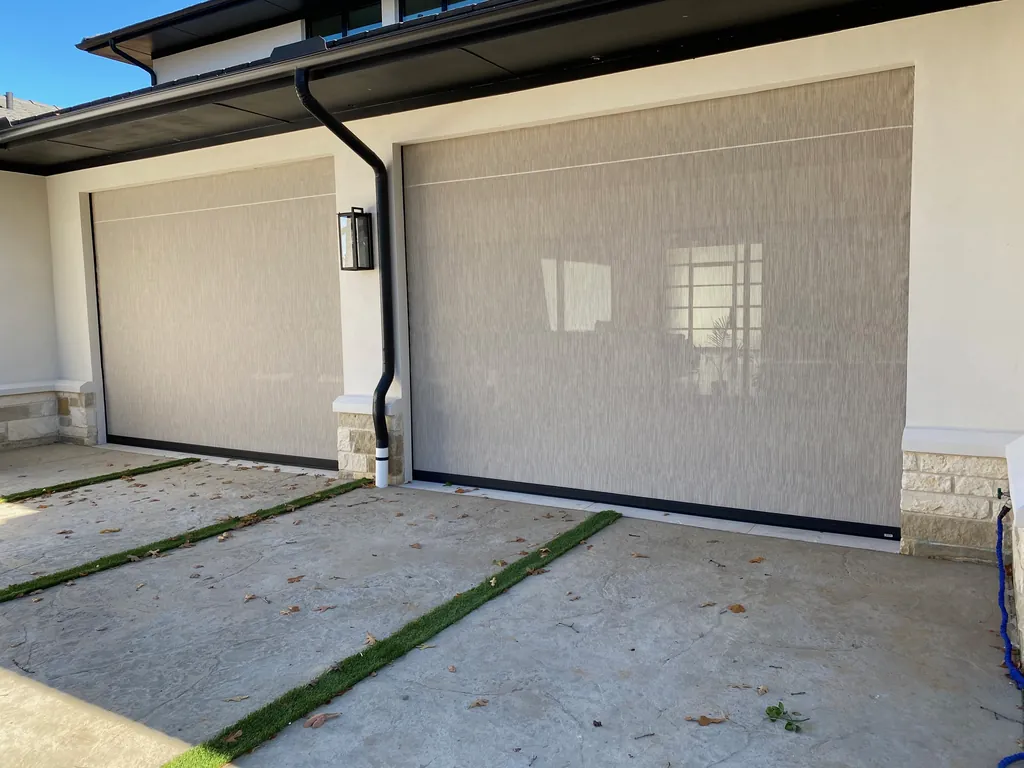
A roller screen needs a fabric thin and light enough to coil tightly into the housing, so for motorized screens we use Phifer SunTex 95 and 97, a vinyl-coated polyester basketweave made for exactly that. SunTex 97 is the closer weave, about 3 percent open — it stops roughly 97 percent of the sun and gives the best glare control and daytime privacy. SunTex 95 is a touch more open, about 5 percent, and keeps a little more of the view. On a hard west opening we lean to 97; where the view matters more than the last of the glare, 95 is the better trade.
Fixed Panels and DoorsSunTex 80 and 90
A framed panel does not have to roll, so it can carry the heavier original SunTex weave. SunTex 80 is the most open of the sun fabrics, about 20 percent, so it keeps the most view while still stopping around 80 percent of the sun — a good choice for a panel you look through all day. SunTex 90 closes that to about 10 percent open and 90 percent of the sun, for a side that takes more direct light. Both come in patio colors, and we match the fabric and the frame finish across the panels and screens on a single opening so they read as one.
Insects FirstNo-See-Ums
Some openings are about the bugs, not the sun. Phifer No-See-Ums is a tight 20-by-20 fiberglass weave that stops gnats, sand flies and the no-see-ums that ordinary screen lets straight through, while keeping the breeze and nearly all of the view. The yarn is vinyl-coated glass, so it resists rust and corrosion and will not burn. It is our usual choice for screen doors and for fixed panels where the point is to let the evening air in without the insects — on a door that also faces the afternoon sun, we use SunTex 90 instead.
WinterClear Vinyl, No Mesh
For a patio you want in January, the answer is no mesh at all. A clear vinyl panel sits in a fabric border and runs in the same housing and zipper track as a sun screen, closing the opening against wind, rain and cold while the view stays completely open. It works up to about sixteen by twelve feet, and it is often paired with a sun screen on the same opening — vinyl for the cold months, mesh for the hot ones. One track, two rolls, and the patio stays usable in both seasons.
ColorDarker Sees Out Better
Fabric color changes the view more than people expect. A darker fabric — charcoal, bronze, black — cuts glare and lets you see out more clearly, because your eye is not fighting a bright screen; a lighter fabric looks softer from inside the house but hazes the view out and shows dust sooner. From the yard, a dark screen tends to read as a clean shadow line under the cover. We generally steer toward the darker end for the view, but the sample is the only way to be sure, which is why we bring them.
See It Before You ChooseThe Showroom
Openness and sun-blocking figures are the manufacturer’s published approximations, and color on a screen is never quite the fabric in daylight. So the fabric is the one decision we do not make on paper. The Phifer samples live in the Blue Note A/V showroom in Farmers Branch, and we bring them to the measuring visit, held against each opening the way the real screen will hang. We also carry a value house fabric in black and charcoal for the openings where the view matters more than the color choice. Ask for the sample before you decide.
Sources. outdoorshades.com (our own site) and Phifer’s published SunTex and No-See-Ums openness figures — October 2026.