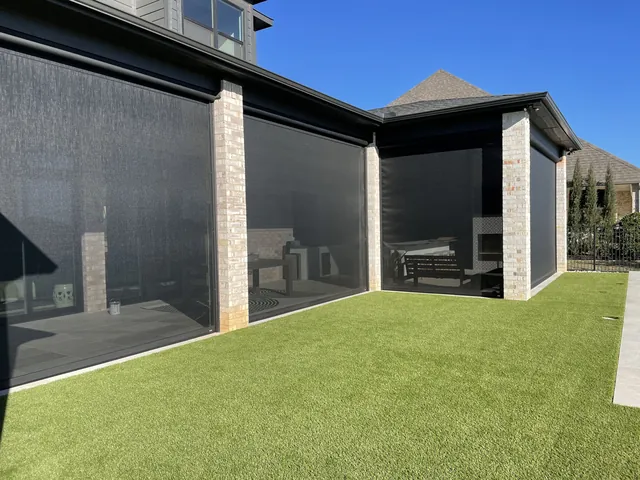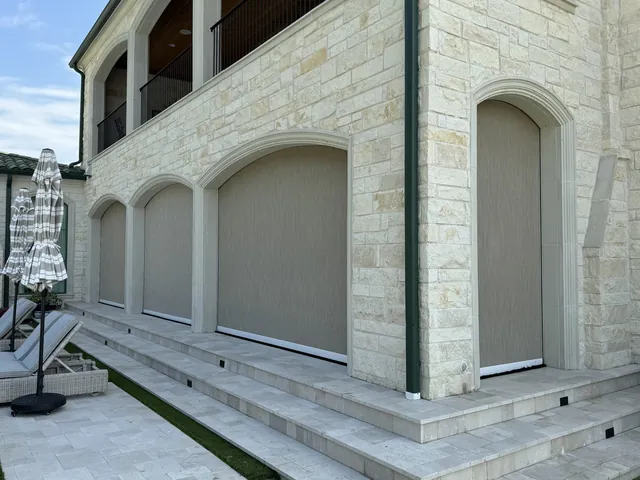
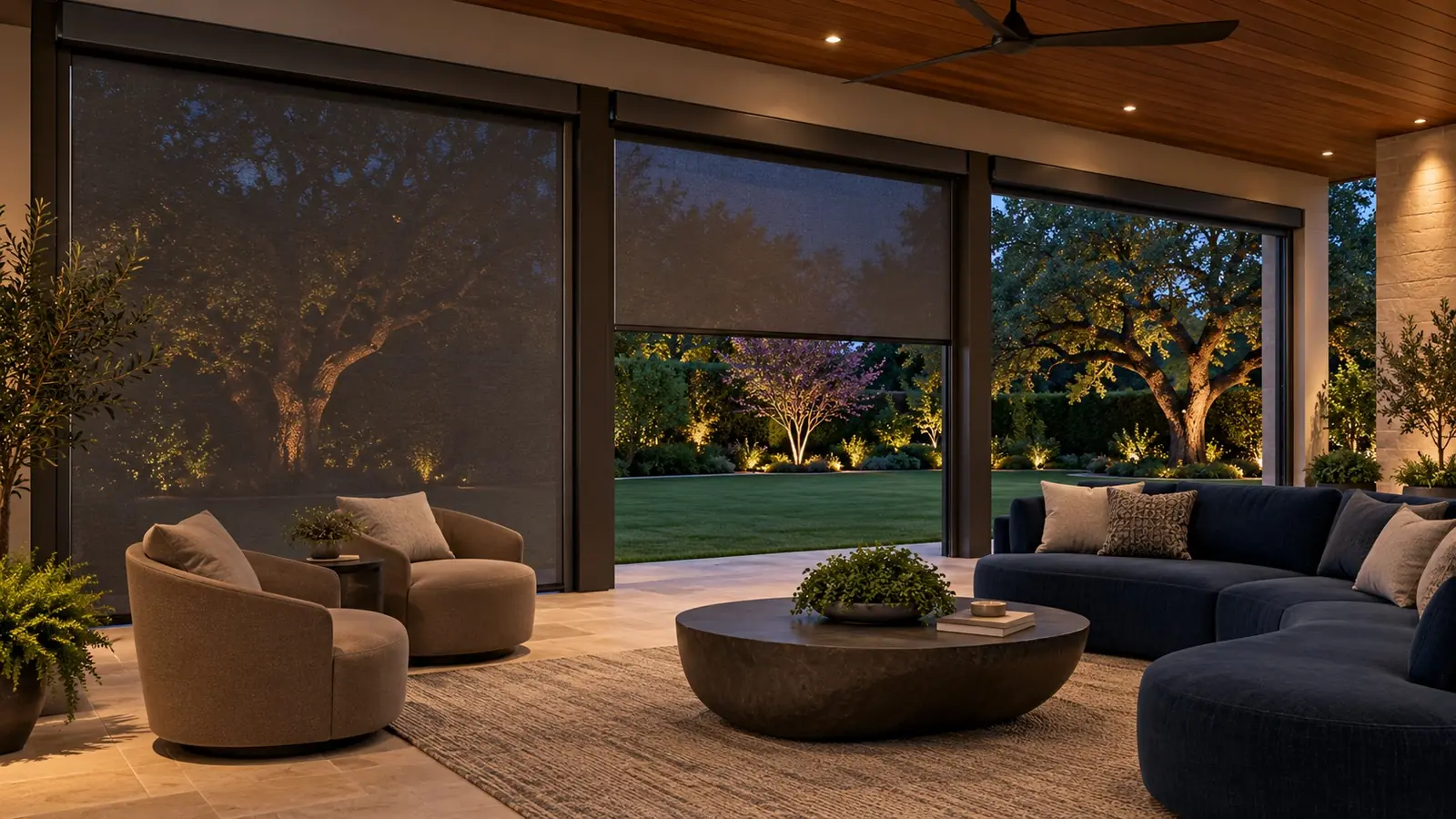
A motorized screen is only as good as the way you control it. A handheld remote works, and most companies stop there — one more remote in the drawer, one more thing to find when the sun comes around. Outdoor Shades is a Blue Note A/V company, which means we do not have to stop there. We put the screens on the same control system that already runs your lights, shades and music, so they behave like part of the house instead of an accessory bolted onto it. Here is what that changes.
The MotorSomfy, Quietly
Every motorized screen we install runs on a Somfy motor, the standard for exterior shading, hidden in the roller tube above the opening. It is quiet, it stops cleanly at the same place every time, and it is built to be controlled by more than its own remote. That last part matters: the motor speaks a language a control system can understand, which is what lets us take the screen off its remote and onto the keypad, the app and the timeclock. The motor is the same either way; the difference is who gets to tell it what to do.
A Remote Is Not ControlWhere Most Installs Stop
A remote lowers a screen when you press it, and that is the whole of it. You still have to be there, remember, and find the right button. On a patio with three or four openings that means three or four remotes, or a multi-channel one nobody else in the house can work. It is fine until the afternoon you are not home and the west sun is cooking the furniture, or the evening a guest wants the screens up and cannot find the remote. Control is the screen doing the right thing without anyone hunting for a button.
One SystemELAN, Control4 or a Somfy TaHoma Hub
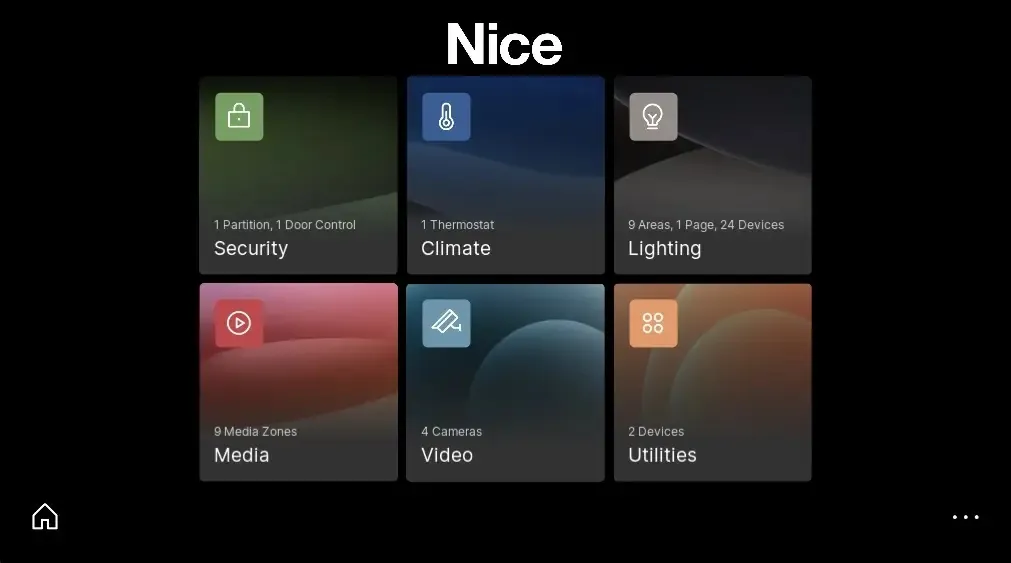
This is the part only an integrator can do. Blue Note A/V is certified on ELAN and Control4, so we put the screens on the same system that runs your lighting, your interior shades and your media. Then a keypad by the door drops the patio screens, the app on your phone does it from anywhere, and a guest uses the same one-touch controls they already use for the lights. The link between the Somfy motors and the house is a Bond Bridge for ELAN and a Somfy TaHoma hub for Control4. If there is no whole-house system, the TaHoma on its own still puts the screens on an app and a schedule. Either way there is no separate remote to hunt for — the screens join the house you already operate, which is the reason to have a screen company that is also your integrator.
The TimeclockScreens That Move on Their Own
Once the screens are on the system, they can move without anyone touching anything. We set a timeclock so the west-facing screens come down at four o’clock when the sun swings around, and go back up at dusk when the air cools. We can tie them to sunrise and sunset so they follow the season rather than a fixed hour, and to an astronomic clock so the schedule shifts with the days getting longer and shorter. The patio takes care of itself, and the first time you notice is when you walk out to a room that is already comfortable.
The Wind SensorIt Raises Itself
Tracked screens handle an ordinary Texas afternoon, but a real gust is a reason to send them up. Somfy makes a wind sensor that does it for you: set a threshold, and when the wind crosses it the screens raise on their own, with no one home and no app involved. On an exposed patio it is the difference between a screen that lasts and one you worry about every time the sky turns. We add one where the opening needs it and wire it into the same system, so the protection is automatic rather than a thing you have to remember.
One ButtonMovie Night, Outside
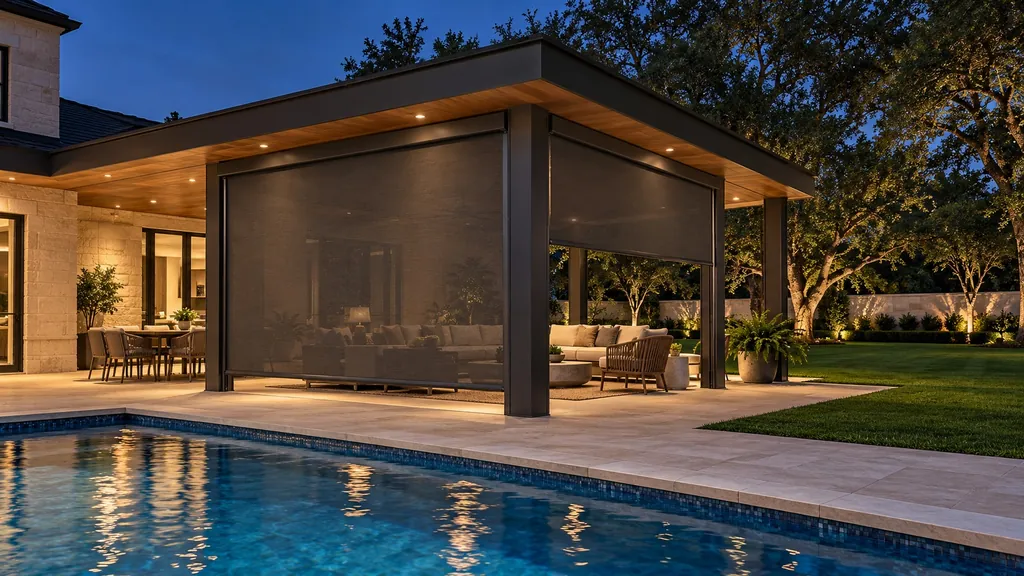
Because the screens live on the control system, they can be part of a scene. One button on the keypad can lower the patio screens, dim the exterior lights, bring up the landscape lighting and turn on the outdoor speakers — the whole patio set for the evening in a single press. Another sends it all back when you are done. This is ordinary work for us because it is what we do inside the house every day; the patio simply becomes another room the system knows how to set.
The IntegratorWhy It Takes One
A screen company can hang a good screen and hand you a remote. Putting that screen on your ELAN or Control4 system, or on a Somfy TaHoma hub, on a timeclock, behind a wind sensor and inside a one-button scene takes the firm that programs the house — which is exactly why Outdoor Shades is a Blue Note A/V company. If you already have a control system, we join the screens to it; if you are building one, we plan the screens in from the start. Either way the goal is the same: a patio you do not have to operate.
Sources. outdoorshades.com (our own site), Somfy, and our Blue Note A/V programming — October 2026.