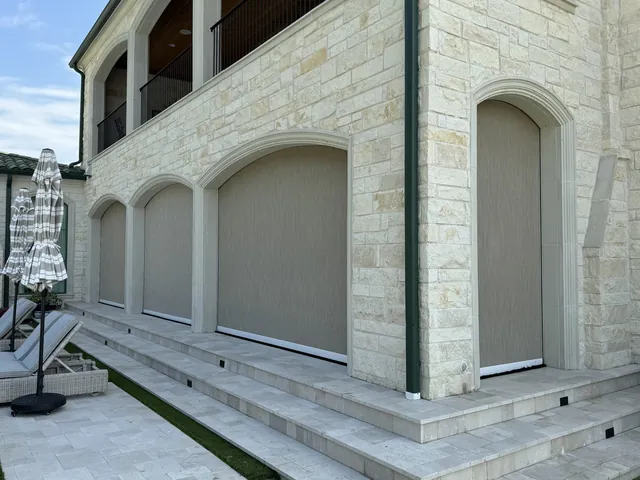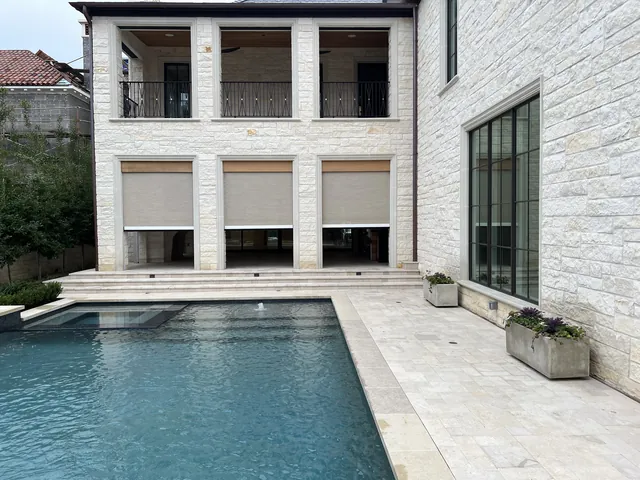
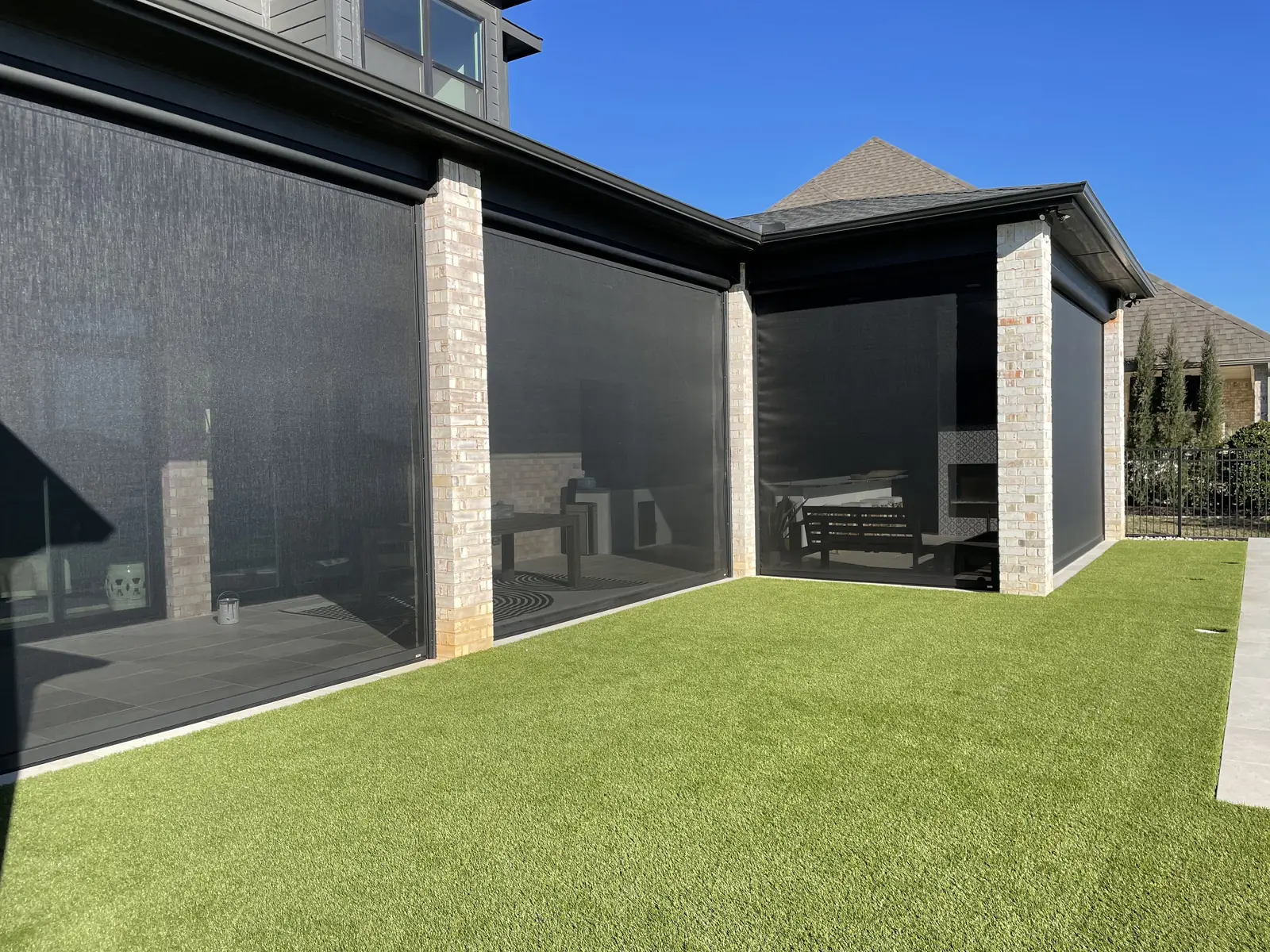
A patio screen lives outside, which means the real question is not whether it looks good down — it is what happens when the wind comes up. A plain roll-down shade flaps, bows and pulls out of its guides; a zipper-track screen does not, because the fabric is locked into the tracks on both sides. That is the whole engineering story of a good exterior screen, and it is why we only install tracked systems. Here is how the track works, what a Texas afternoon it can take, and where the honest limit is.
The TrackHow a Zip Screen Holds
The edge of the fabric is welded to a continuous zipper, and that zipper rides inside a channel down each side of the opening. As the screen lowers, the edges stay captured in the tracks the whole way down, so there is no gap at the sides and nothing for the wind to get behind. It is the difference between a sail and a wall: a screen held only at the top and bottom catches the wind and bows, while a tracked screen transfers that load into the frame and stays flat and quiet. The track is what makes an exterior screen worth installing.
The HousingWhere It Lives
Above the opening, the roll of fabric and the Somfy motor sit inside a housing, a slim enclosure that keeps the roller out of the sun and out of sight when the screen is up. On new construction we recess the housing into the ceiling so only a clean reveal shows; on an existing patio we surface-mount it tight under the beam and color it to match. Either way the fabric comes straight down out of the housing into the side tracks, so the whole mechanism is protected and the opening looks finished whether the screen is up or down.
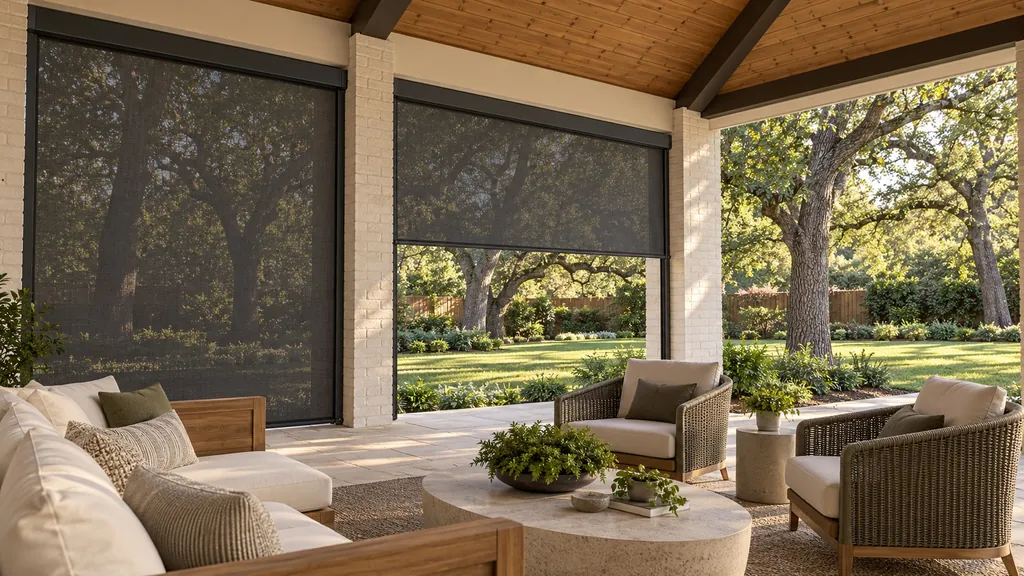
The Bottom BarClosing the Floor
At the bottom of the fabric is a weighted bar that pulls the screen taut as it lowers and seals the opening against the floor. It is what gives a lowered screen its clean line, and it is the last piece of the insect seal: edges zipped into the tracks, bottom bar down to the slab, and the opening is closed with no gaps for mosquitoes or no-see-ums. We set the bar to meet the floor cleanly and check it at installation, because a screen that seals everywhere except the last inch is not sealed.
The Wind It HandlesAn Ordinary Afternoon
Because the fabric is held on both sides, a tracked screen shrugs off the gusty afternoons that are normal here. The wind pushes on the fabric and the tracks carry the load; the screen stays flat, does not flap, and keeps doing its job through the kind of breeze that would tear a loose shade out of its channels. For the great majority of days a tracked screen is simply left down when you want shade and bug protection, and the wind is a non-event. That reliability is the point of paying for a real exterior system.
The Honest LimitNot a Storm Shutter
Our supplier rates tracked screens for wind up to about 35 to 40 miles an hour. Here is the honest part: a tracked screen is not a hurricane shutter, and we will never tell you it is. A genuine storm — the kind with warnings — is a reason to send the screens up, not to test them. Up in the housing, the fabric is protected and there is nothing exposed to damage. This is not a weakness peculiar to our screens; it is true of every fabric exterior screen made. The right move in a storm is the easy one, because the screens are motorized: send them up and let it pass.
The Wind SensorIt Raises Itself
You should not have to be home, or awake, to protect the screens. Somfy makes a wind sensor that watches the opening and raises the screens on its own when a gust crosses a threshold you set. On an exposed patio — a second story, a lakefront, a wide western opening with nothing to break the wind — we add one and wire it in, so the screens take care of themselves when the weather turns. It is a small cost at installation and the thing that lets you stop thinking about the screens every time the sky darkens.
Measured and PlumbWhy Ours Last
A tracked screen only works if the tracks are straight, which is why every screen is made to the measurements of its own opening and the channels are set plumb and parallel. Get that right and the zipper runs smoothly for years; get it wrong and it binds. It is careful work, and it is the reason the manufacturer stands behind the screen fabric for ten years, the motor and remote for five, the powder-coated frame for life and clear vinyl for one year, with our own labor guaranteed for a year. Built square to the opening, a tracked screen is a long-term piece of the house.
Sources. outdoorshades.com (our own site) and Somfy — October 2026.